
The Purification Offering — Turning Again Toward God's Target
What Happens When the Priest Sins?
The life of this offering is the life given in place of mine
Leviticus 4:3-12EnglishThe English PDF edition is currently in preparation.
In this article 9
What Happens When the Priest Sins?
“If the anointed priest sins, bringing guilt upon the people…” — Leviticus 4:3
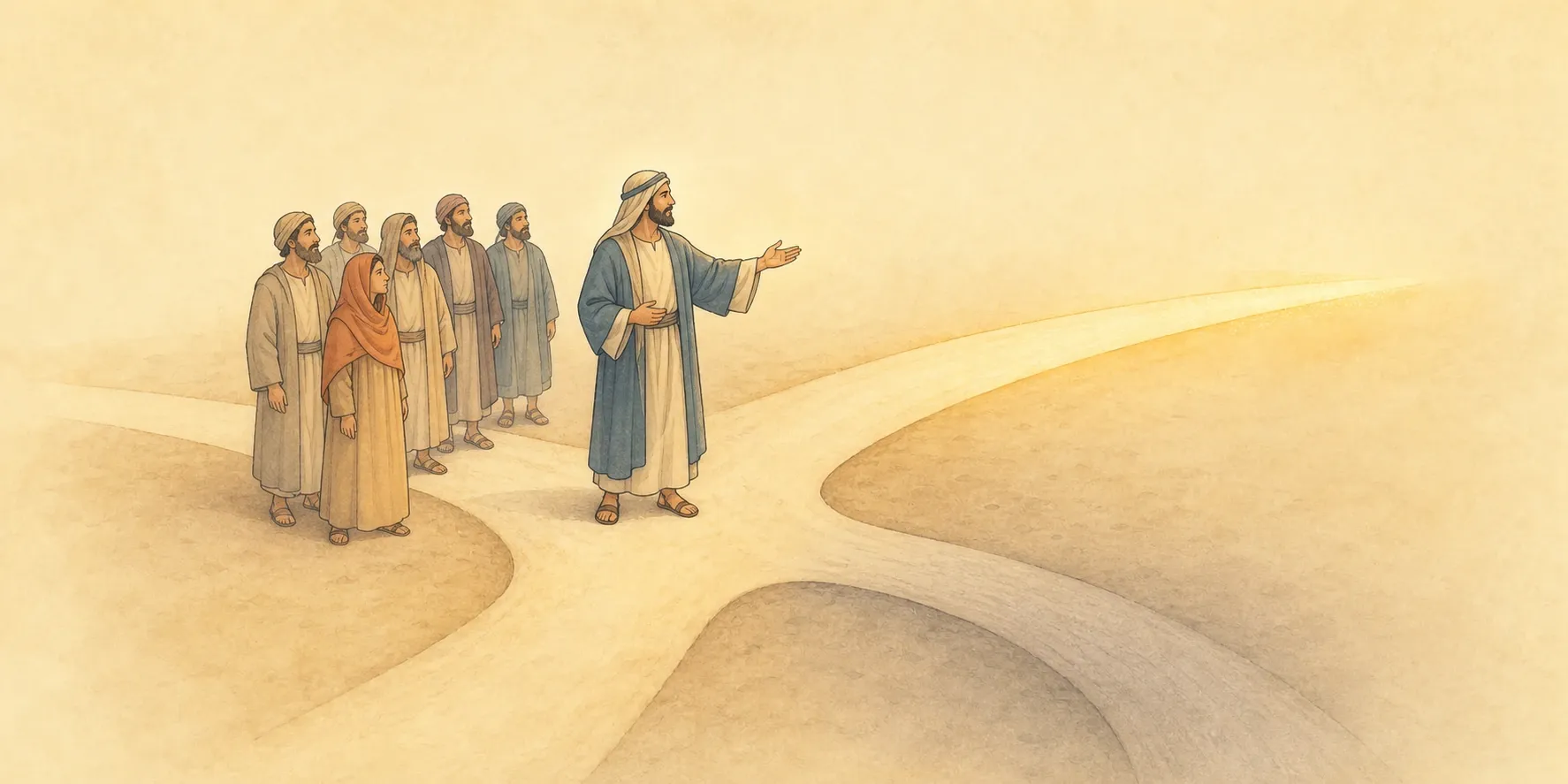
One view understands the priest’s sin here as a personal error (Tim Hegg, p. 29). Rabbi Hirsch, however, understands it as a case in which the priest misinterprets or misjudges God’s law and thereby leads the people down the wrong path (Hirsch, pp. 110–113).
The priest’s calling was to teach God’s Word correctly and embody it in his own life. When a priest misinterpreted the law, the consequences did not stop with him. All the people who trusted and followed his teaching could be led astray.
Pastors who proclaim the Word today must also take this warning to heart. Those who preach are frail human beings and can make mistakes. That is precisely why they must study the Word, pray, and seek the illumination of the Holy Spirit all the more diligently.
A single word I teach can bring life to someone’s soul—or lead that person in the wrong direction. Those entrusted with the Word need not only knowledge but also reverent fear and humility.
What Does “Guilt upon the People” Mean?
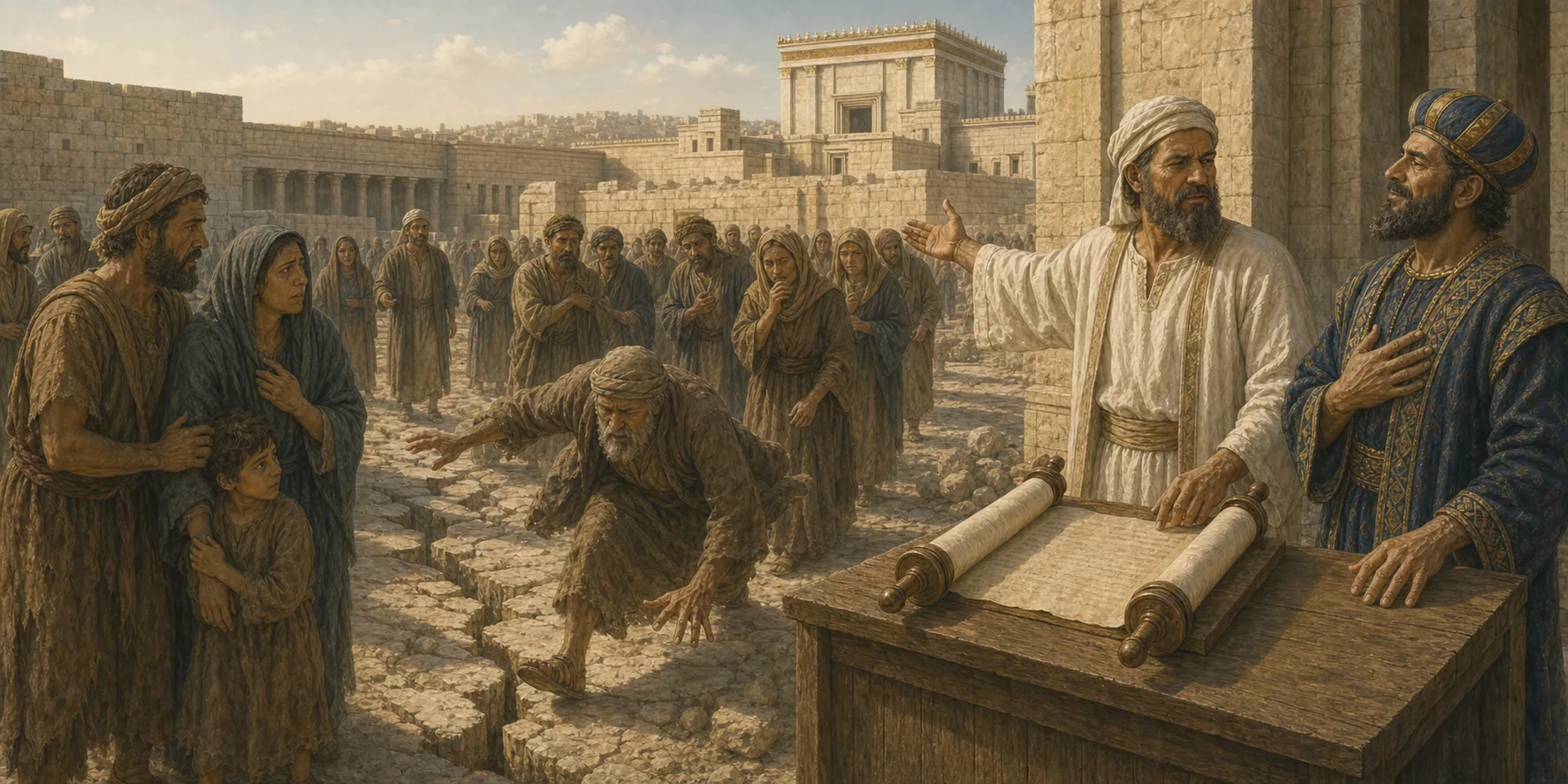
The chain of responsibility: a false interpretation leads to the community’s guilt
Asham (guilt) describes the condition of bearing liability because of sin.
An important distinction: The “trespasses” mentioned in Ephesians 2:1 correspond to the Hebrew concept pesha, which signifies deliberate rebellion.
“He made us alive, who were dead in trespasses and sins.” — Ephesians 2:1
A Young Yet Mature Bull
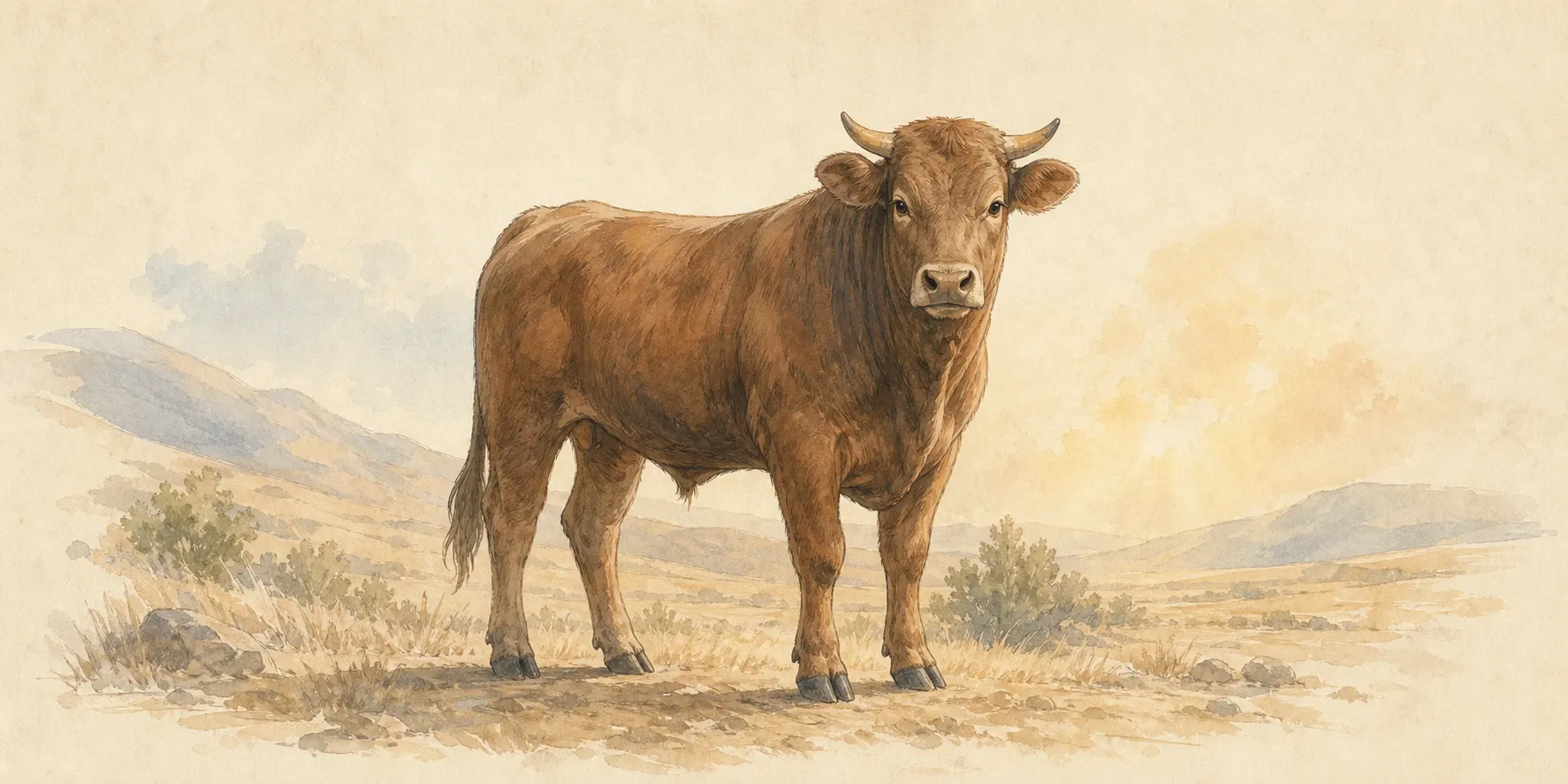
Fully grown, but not yet old
The bull offered by the high priest is called par ben baqar in Hebrew.
- Par: bull
- Ben: son
- Baqar: herd or cattle
The phrase denotes a young bull that was fully grown but not yet old. More than two years old but not yet three, it was a valuable animal possessing both strength and maturity (Mishnah Parah 1:2).
Rabbi Hirsch applies the image of this bull to spiritual leaders. A leader must be mature, but must not grow rigid merely because of many years in the faith. When even holy work becomes repetition and habit, the prideful thought “I already know this” can take hold.
Before God, the high priest had to recover a heart like that of the young bull: mature, yet freshly willing each day to learn and reconsider his way. He needed youthful maturity.
Laying Hands on the Offering’s Head
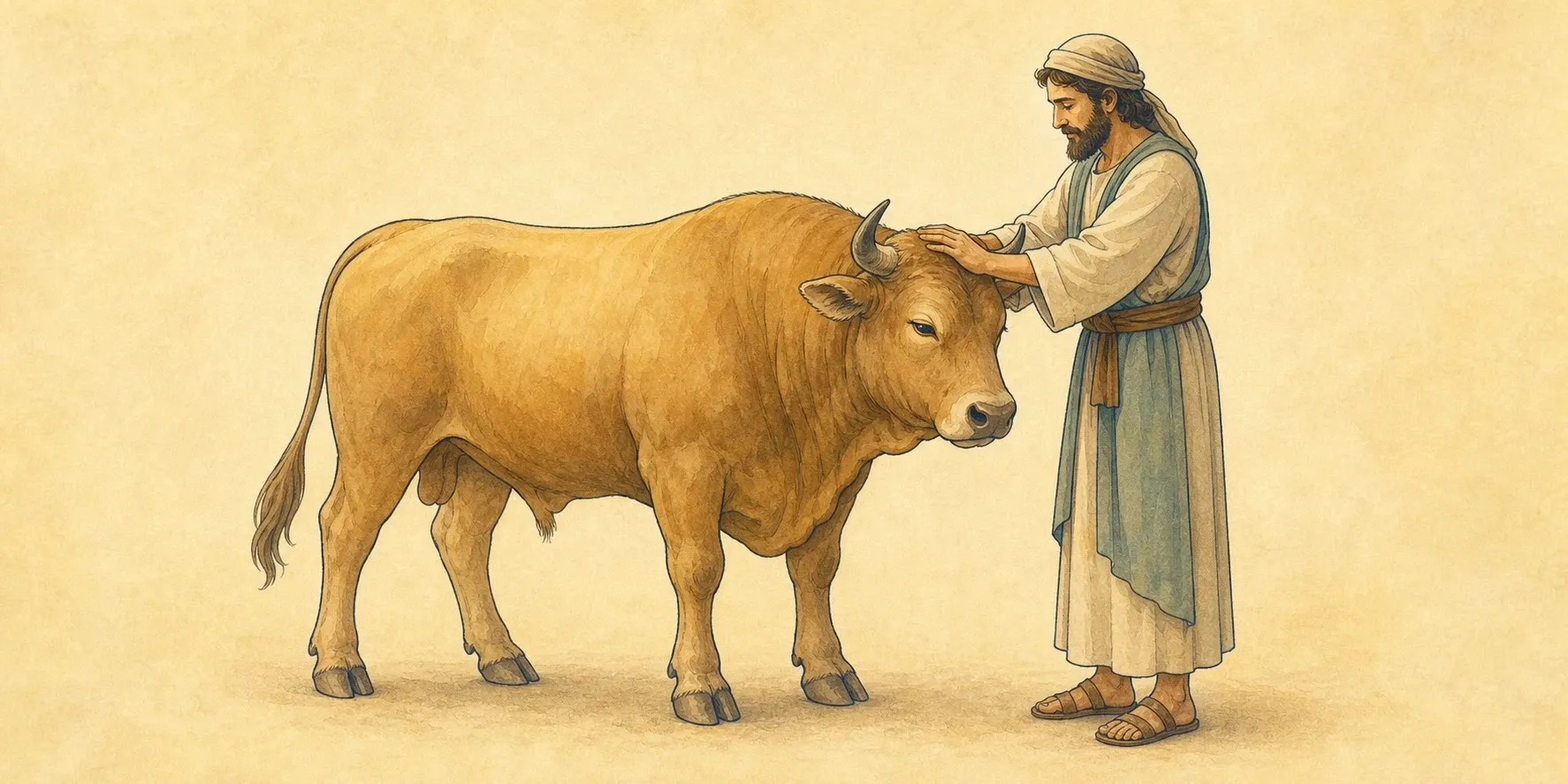
A sign of identification joining the worshiper to the offering
The person who had sinned laid hands on the offering’s head. This was not simply the act of touching an animal.
“This offering stands in my place.”
“The life of this offering is the life given in place of mine.”
The laying on of hands was a sign of identification between the sinner and the offering. Looking at the animal, the sinner recognized the gravity of sin and, at the same time, saw the grace of God, who had provided a substitute to die so that the sinner might live.
All these sacrifices point ahead to Jesus Christ, who would give his life in our place.
What the Bull’s Blood Reveals
“The anointed priest shall take some of the bull’s blood and bring it into the tent of meeting…” — Leviticus 4:5
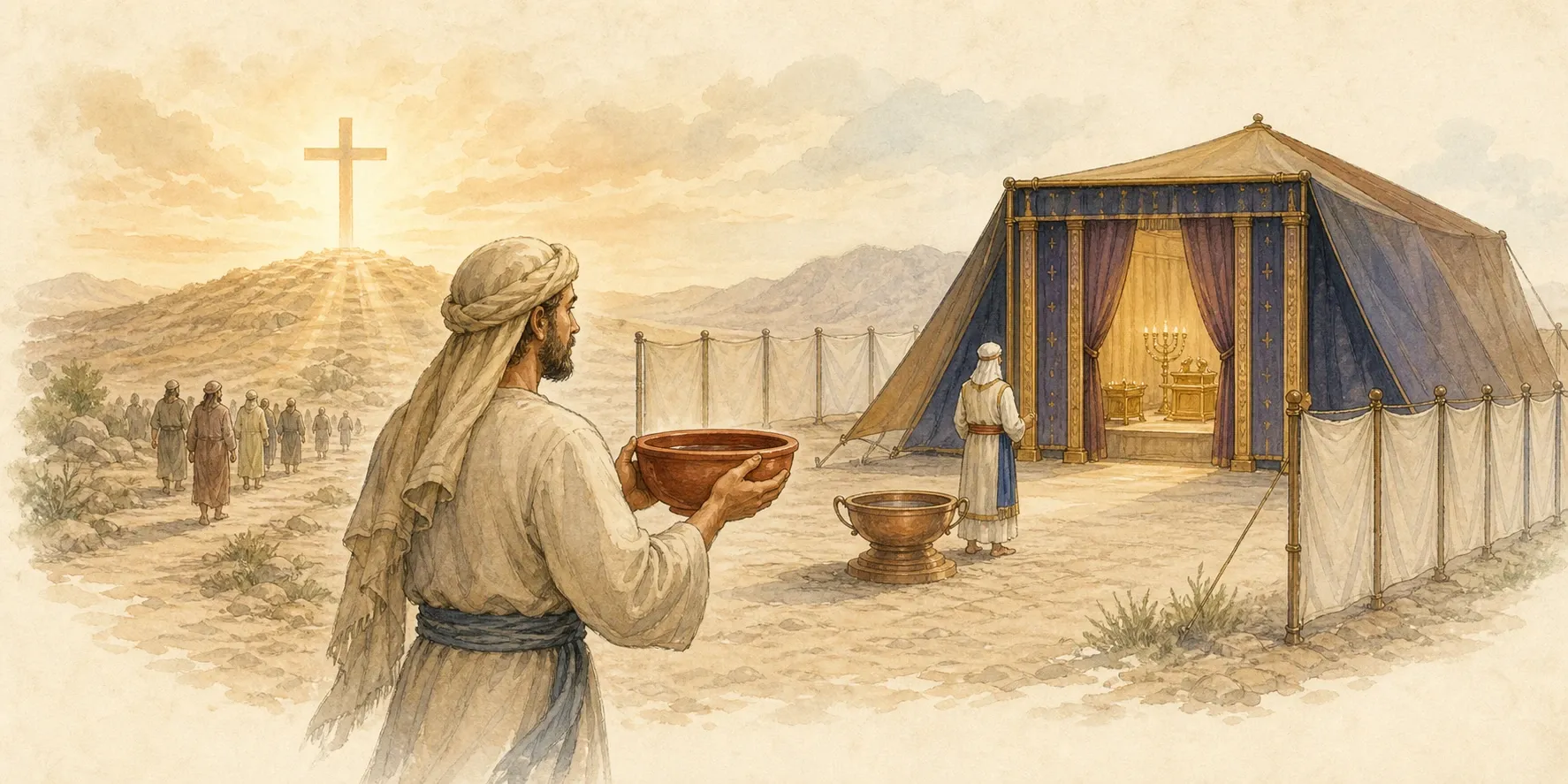
Life · Substitution · Atonement
Scripture says that life is in the blood. Blood represents the life of the offering.
The high priest was not perfect. Though he offered sacrifices for others, he too needed an atoning substitute for his own sin.
The bull’s blood was blood given in place of the high priest’s life. It also foreshadowed the blood Jesus Christ would shed to cleanse us from sin.
Why Sprinkle Blood Seven Times Before the Curtain?
“The priest shall dip his finger in the blood and sprinkle some of the blood seven times before the LORD, in front of the curtain of the sanctuary…” — Leviticus 4:6
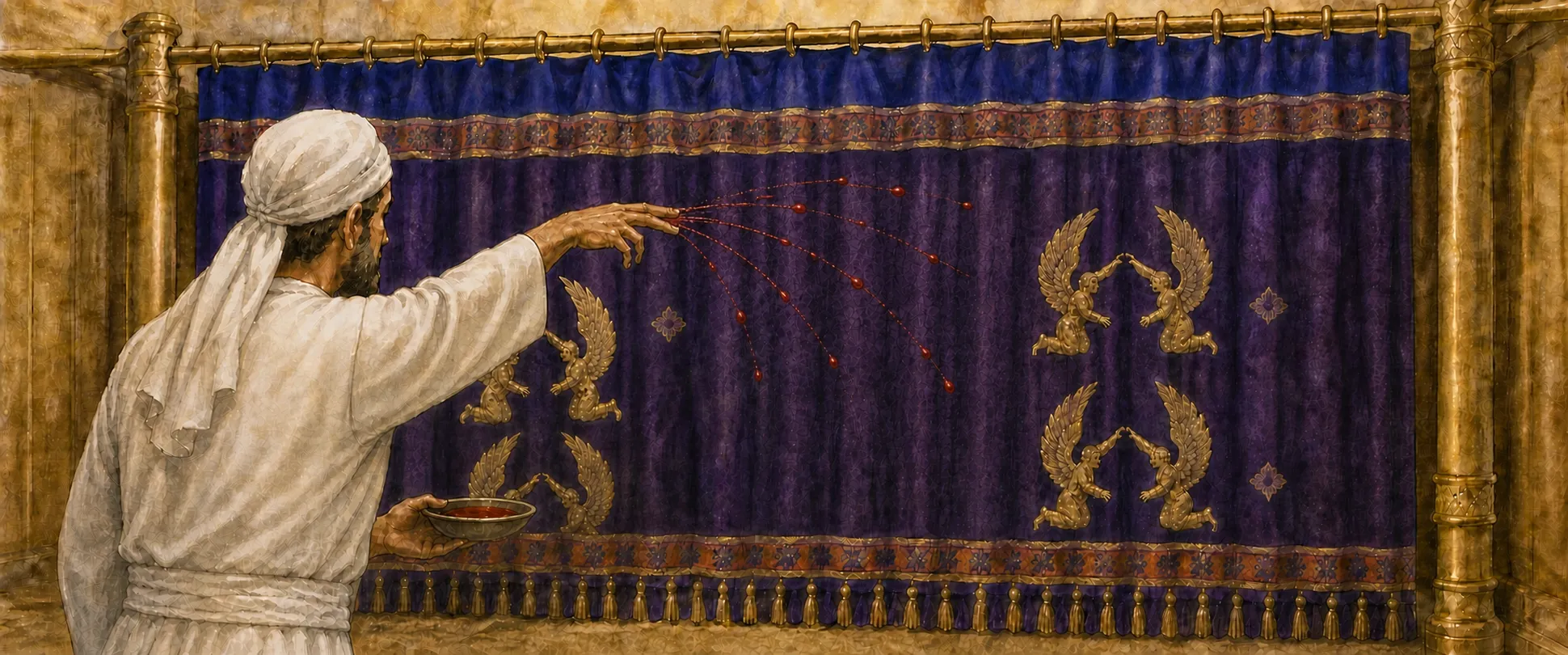
From a barrier that shut the way to a way opened once again
The curtain marked the boundary between the holy God and his people. The priest’s sin could cloud not only his personal life but also communion between God and the people.
Sprinkling blood before the curtain signified cleansing the way of fellowship that sin had blocked and restoring the relationship with God. Seven is a biblical number of completeness. Yet the sacrifices in Leviticus had to be repeated whenever sin occurred.
On the cross, Jesus Christ accomplished perfect atonement once for all. When Jesus died, the sanctuary curtain was torn from top to bottom, showing that his blood had opened a new and living way to God (Hebrews 10:20).
Applying Blood to the Horns of the Incense Altar
Restoring prayer and fellowship that sin had obstructed
“The priest shall put some of the blood on the horns of the altar of fragrant incense before the LORD in the tent of meeting…” — Leviticus 4:7
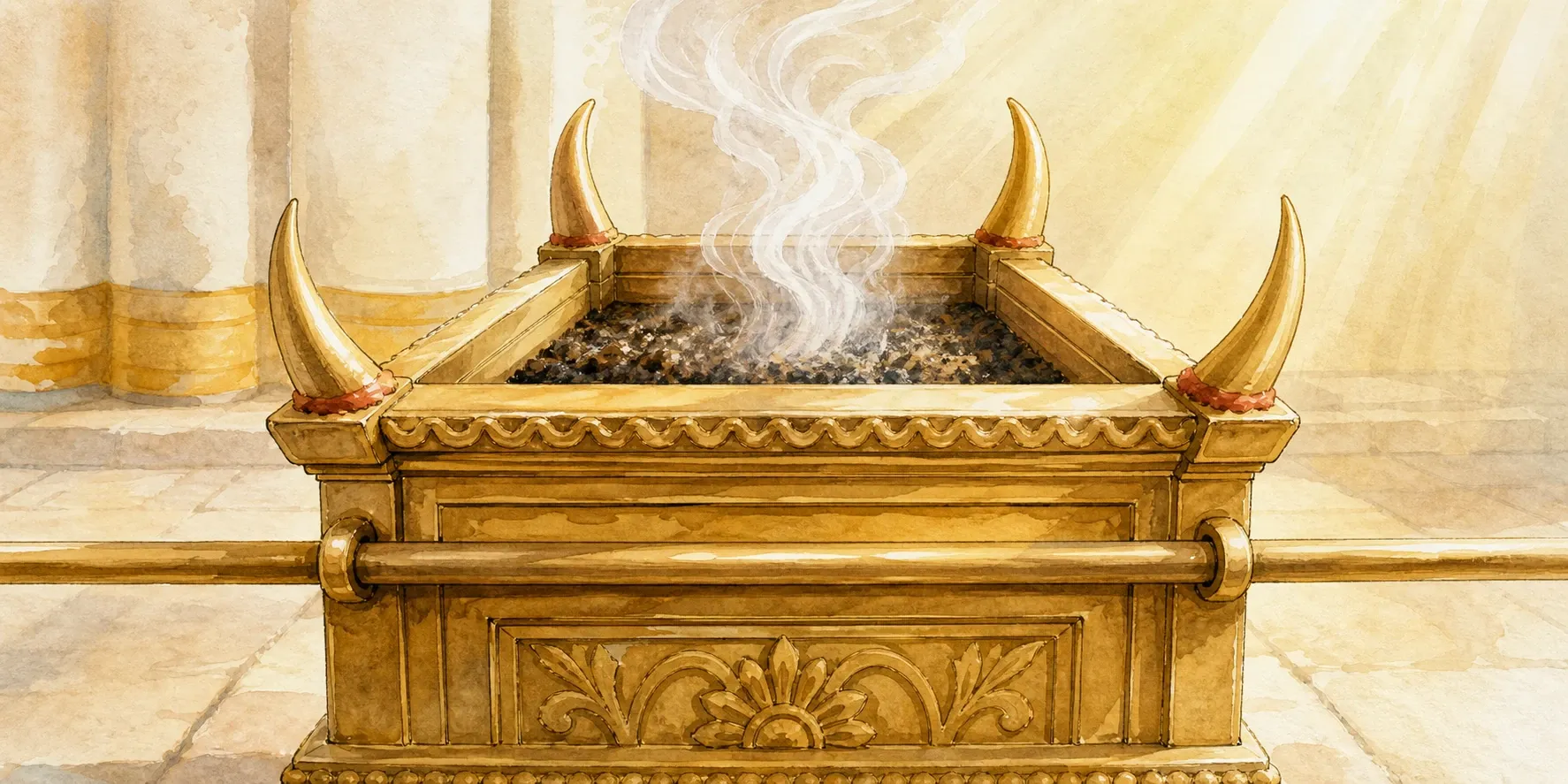
The place of prayer and fellowship
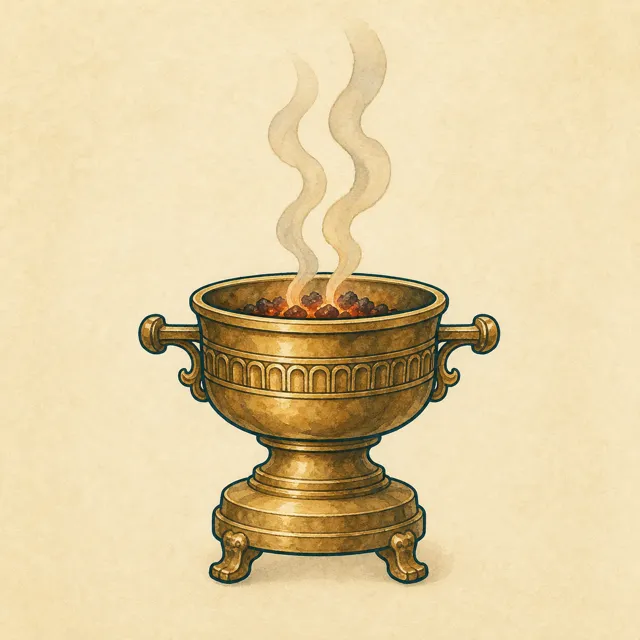
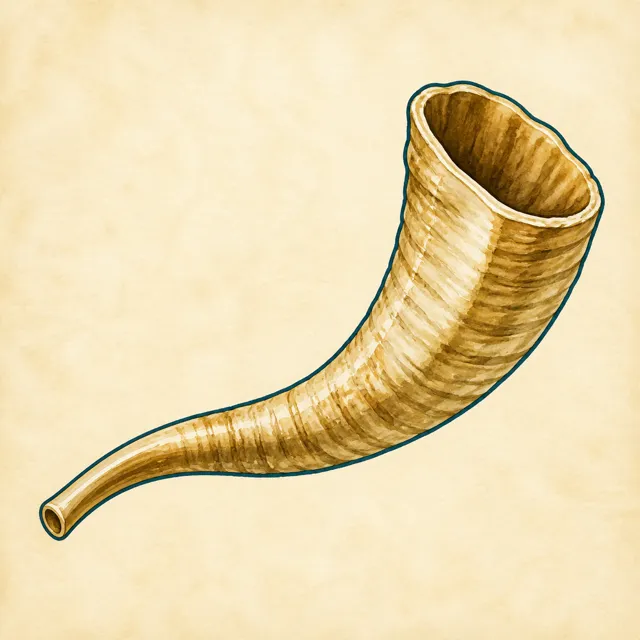
The incense rising from the altar symbolizes the prayers of the saints and fellowship with God (Revelation 5:8). In Scripture, horns also represent strength, authority, and the power of salvation.
When a priest sinned, fellowship between God and the people could become clouded, and his calling to intercede for the people could be weakened. Applying blood to the horns of the incense altar was an act of cleansing the place of prayer that sin had obstructed.
Sin hinders prayer. The grace of atonement enables us to pray again.
Offering the Fat and Kidneys on the Altar
God does not erase desire; he redirects it
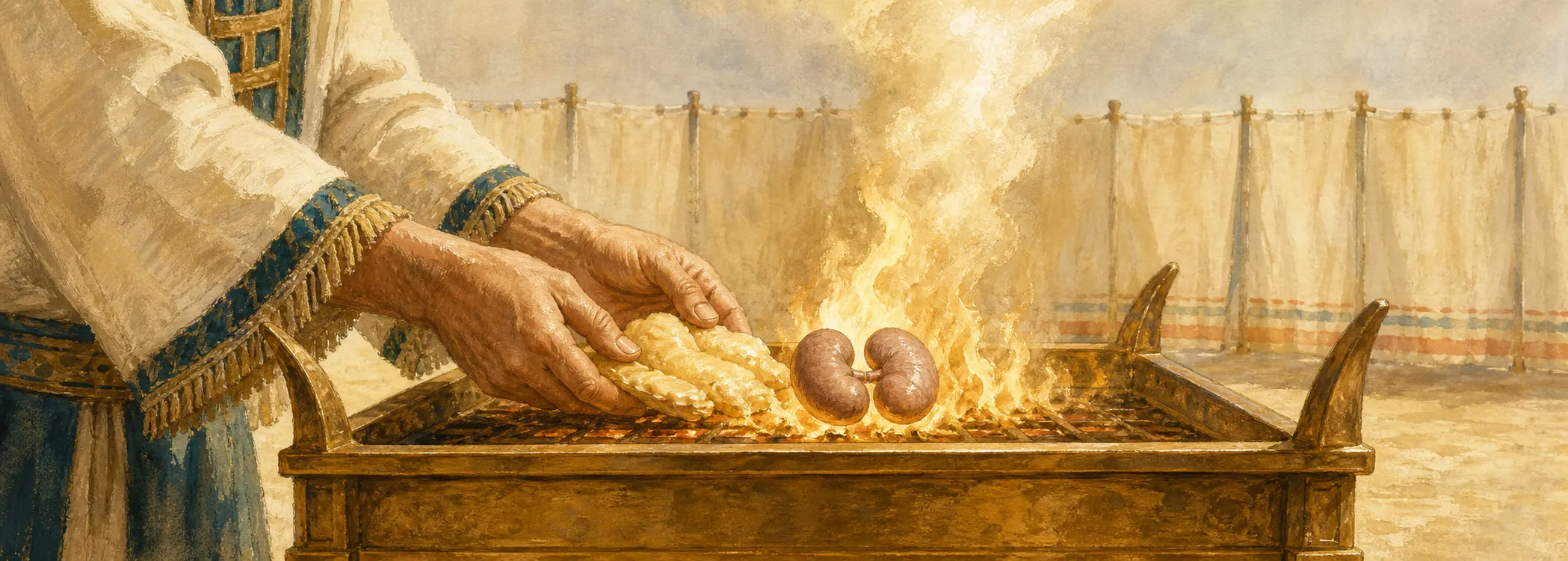
“All the fat of the bull he shall remove from it… the two kidneys with the fat that is on them… he shall remove…” — Leviticus 4:8–9
Not disposal, but redirection toward a holy purpose
While the other meat and internal organs of the purification offering were burned outside the camp, the fat and kidneys were removed and burned on the altar of burnt offering.
In Hebrew thought, fat points to the energy of life, while the kidneys represent the deep inner place that determines how that energy will be used. Though the sinner’s actions were wrong, God did not discard every passion and desire within that person.
God calls us to place the desires and strength that had flowed in the wrong direction upon the altar and turn them toward him.
Atonement is not a process that renders a person powerless. It is recreating grace that takes the energy once used for sin and employs it anew for a holy purpose.
The Fire of Judgment Burns, Yet the Place Is “Clean”
“But the hide of the bull and all its flesh… the whole bull he shall carry outside the camp to a clean place, where the ashes are poured out, and burn it…” — Leviticus 4:11–12

Restoration begins in a place that looks like the end
The offering was burned outside the camp, yet Scripture calls that location a clean place. This is a remarkable expression.
If we look only at what sin has defiled being consumed by fire, it may appear that everything has ended. God’s dealings, however, do not end in destruction. God burns away sin but leads the sinner into restoration.
The ashes may seem to symbolize an ending, yet in God they become a clean place for a new beginning.
Hebrews connects this scene with Jesus Christ. Jesus also suffered outside the city gate in order to sanctify the people through his own blood (Hebrews 13:12).
Jesus stood in the place where we deserved to be cast away. Because Christ went outside the camp, we have been enabled to enter again into God’s presence.