
The Purification Offering — Turning Again Toward God's Target
The Leader's Purification Offering
Even the highest leader remains under God's Word
Leviticus 4:22-35EnglishThe English PDF edition is currently in preparation.
In this article 4
The Leader’s Purification Offering
Even the highest leader remains under God’s Word
“When a leader sins, doing unintentionally any one of all the things that by the commandments of the LORD his God ought not to be done, and incurs guilt…” — Leviticus 4:22
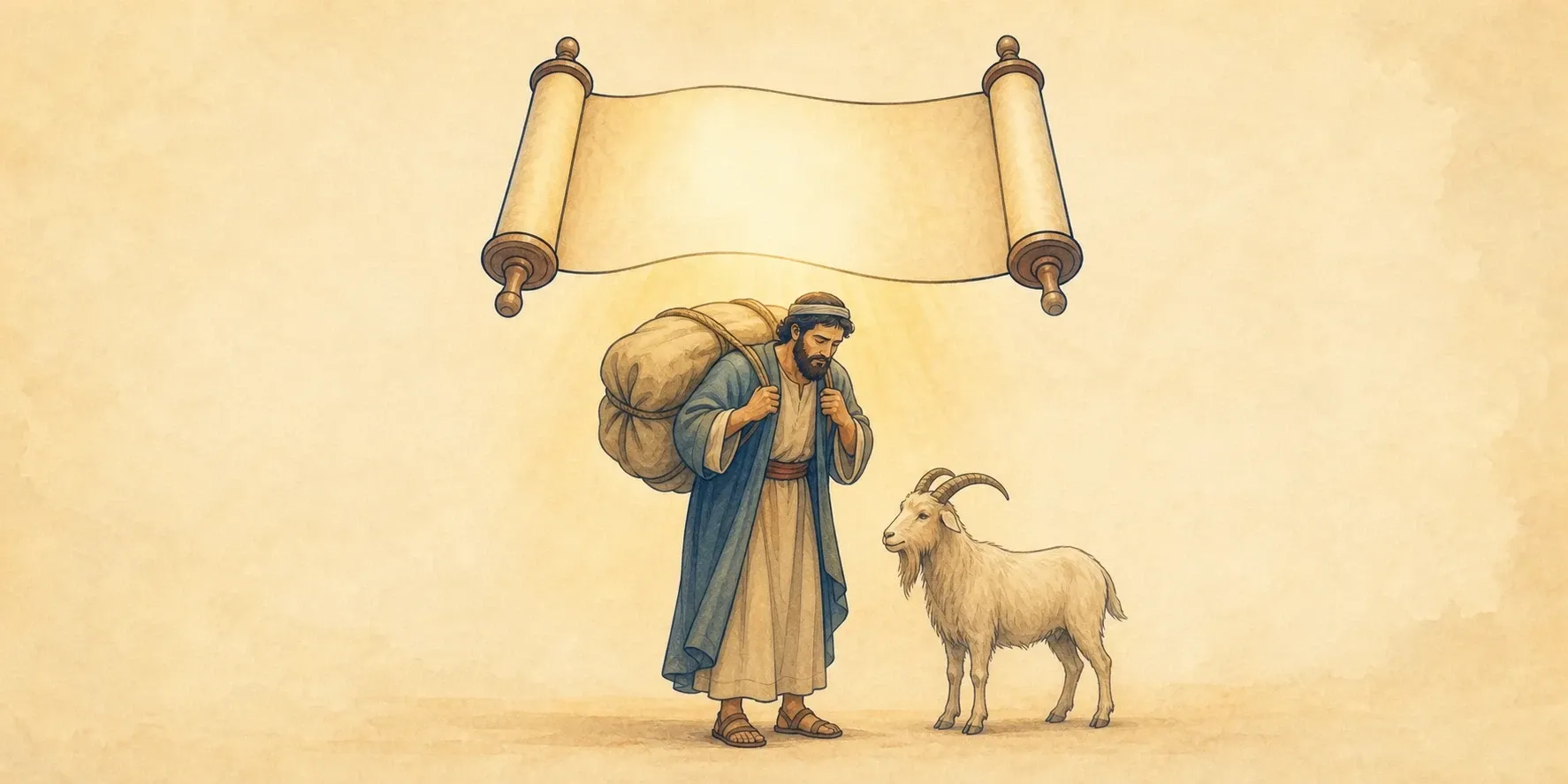
The higher the position, the weightier the responsibility
The Hebrew word for “leader” is nasi (נָשִׂיא), a term for a ruler or lesser king. Jewish tradition connects the nasi with the king. The word is also related to nasa, “to lift up” or “to bear a burden.”
A king is a person lifted high above others, yet he is also the person called to bear the people’s heavy burdens. Israel’s king did not stand above God’s law. The king too stood under God’s Word.
It mattered that when the king recognized his sin, he came before the people and presented an offering. A healthy society is not one whose leaders never make mistakes, but one in which leaders can acknowledge their wrong and humble themselves before the Word.
The king offered a male goat. The goat’s strong disposition evokes a leader’s decisiveness and drive. Yet when a strong will is not held fast by the Word, it becomes stubbornness and ambition.
A leader’s strength must not be strength used to accomplish personal wishes, but strength used to obey God’s will and carry the people’s burdens.
The Purification Offering of an Ordinary Person
The soul of an ordinary person is precious to God
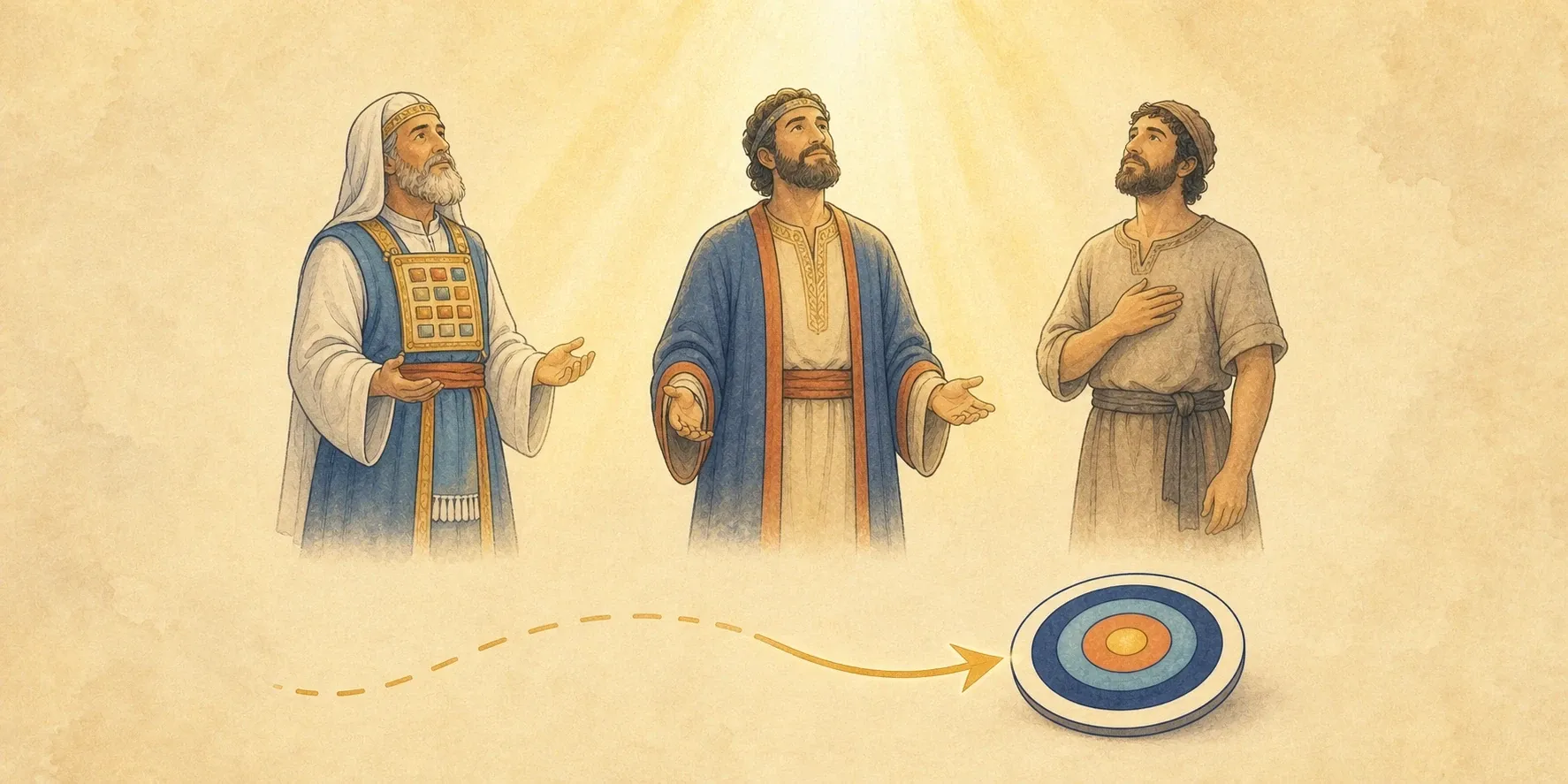
God’s gaze rests on each ordinary soul as well
Leviticus deals in detail not only with the sins of the high priest, the king, and the whole congregation, but also with the sins of ordinary people.
Low social standing does not remove the responsibility to obey the Word. At the same time, this shows that the soul of an ordinary person is as precious to God as the soul of a high priest or king.
God values even small choices that no one else recognizes. Conversely, even a small sin unknown to anyone else can affect the community.
The purification offering brings every person before God. It demands weightier responsibility from those in high positions, yet it does not treat those in low positions as insignificant. Before God, every soul has dignity, and every person needs the grace of restoration.
The Heart of the Purification Offering Is a Future Resolve, Not Merely Clearing the Past
The purification offering was not merely a sacrifice for erasing a past record.
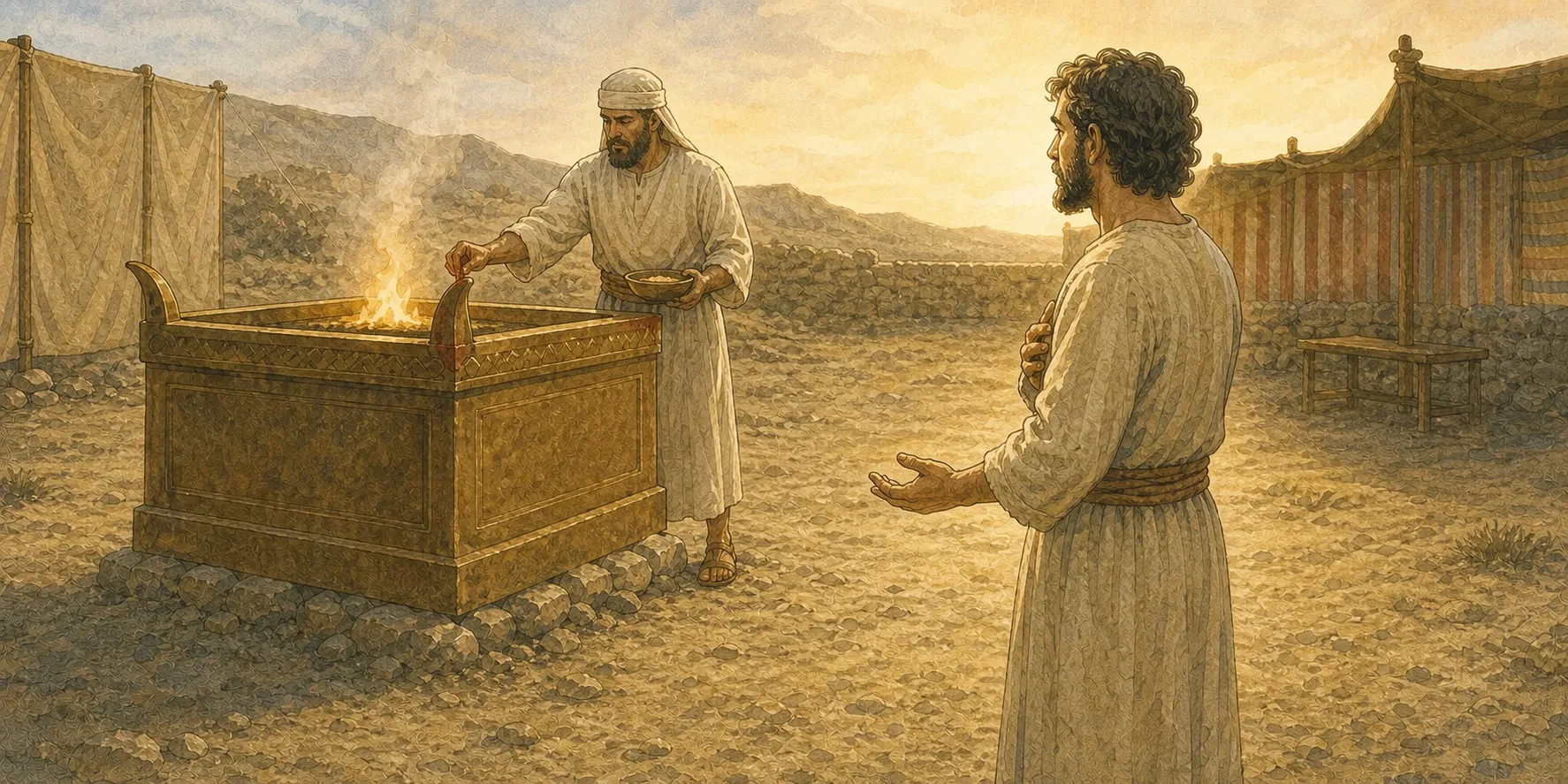
The worshiper watched the blood being applied to the altar and the fat being consumed by fire. The worshiper had to place life and desire, action and will, once again under God’s rule.
The true fruit of atonement appears in resolves like these:
“I will not go in the same direction again.”
“I will make God’s Word my target once more.”
“I will entrust my life and desires to the Lord’s will.”
Repentance is not merely an emotion of sorrow. It is the act of changing direction.
What Does It Mean to Apply Blood to the Altar’s Horns and Pour It Out at Its Base?
“The priest shall take some of its blood with his finger and put it on the horns of the altar of burnt offering and pour out all the rest of its blood at the base of the altar…” — Leviticus 4:30
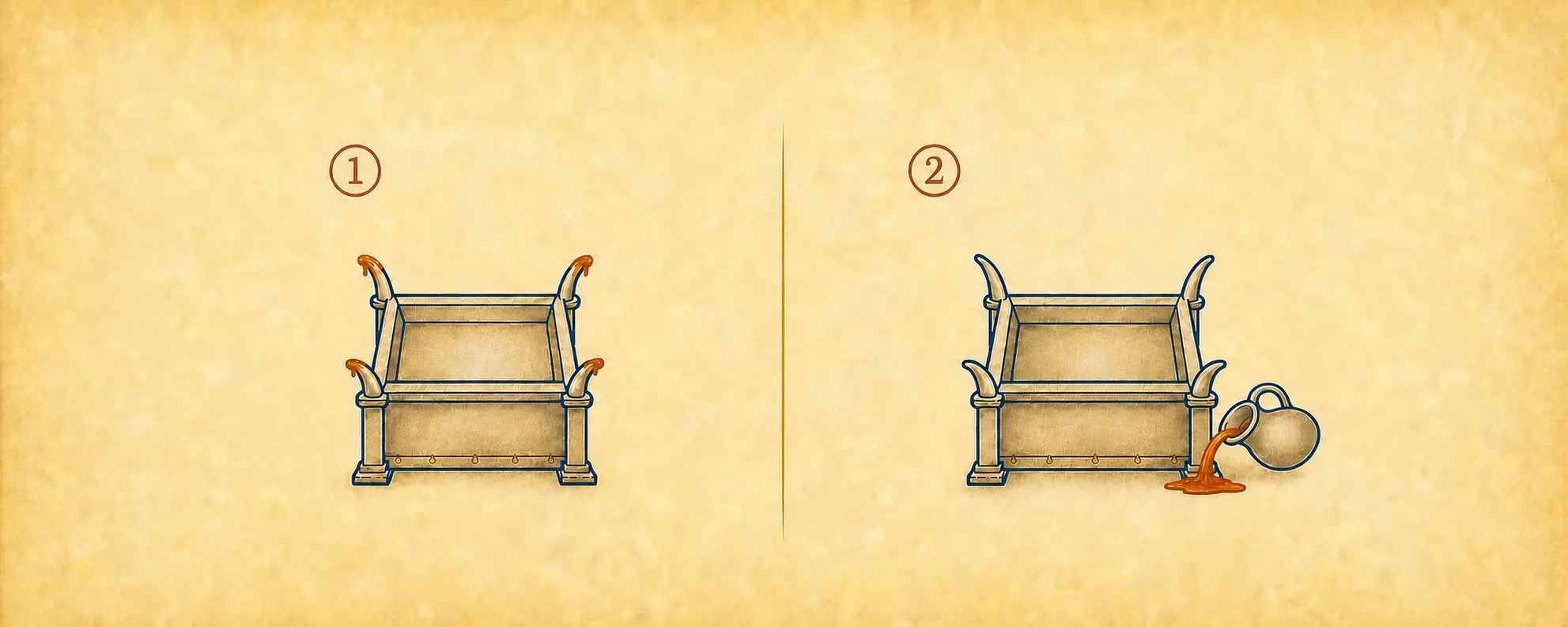
Applying the blood of the purification offering to the horns of the altar portrays the reestablishment of moral standards that sin had torn down—as though fastening them once more to the altar’s horns.
All the remaining blood was poured out at the base of the altar. This signified that the forgiven person now offered his or her life to the Lord. Paul likewise said that his life was being poured out as a drink offering to God (2 Timothy 4:6).
The Hebrew word for the altar’s “base” is yesod, meaning “foundation.” Because Jesus Christ is our foundation (1 Corinthians 3:11), we may understand this as a confession in which we pour out our entire lives in devotion to Jesus, our rock and foundation.